Singapore Solar Projects: 10 Major Initiatives Powering a Greener Future
Singapore Solar Projects have become one of the country’s biggest success stories in renewable energy. Despite limited land, high population density, and a tropical climate, Singapore continues to prove that clean energy is possible with smart planning and modern technology.
Solar power now appears on rooftops, reservoirs, industrial buildings, schools, ports, and even offshore platforms. Every year brings new developments, larger installations, and stronger commitments toward reducing carbon emissions.
If you’re curious about how Singapore is building its solar future, these projects are worth knowing.
Why Singapore Is Investing in Solar Energy
Singapore doesn’t have large rivers for hydropower or strong winds for wind farms. Nuclear energy isn’t currently part of the country’s energy mix either. That leaves solar energy as the country’s most practical renewable resource.
The government has steadily expanded its solar targets while encouraging businesses, homeowners, and public agencies to participate. New technology has also made solar panels more efficient than they were just a few years ago.
And that’s important because every additional rooftop can contribute to cleaner electricity generation.
1. Tengeh Reservoir Floating Solar Farm
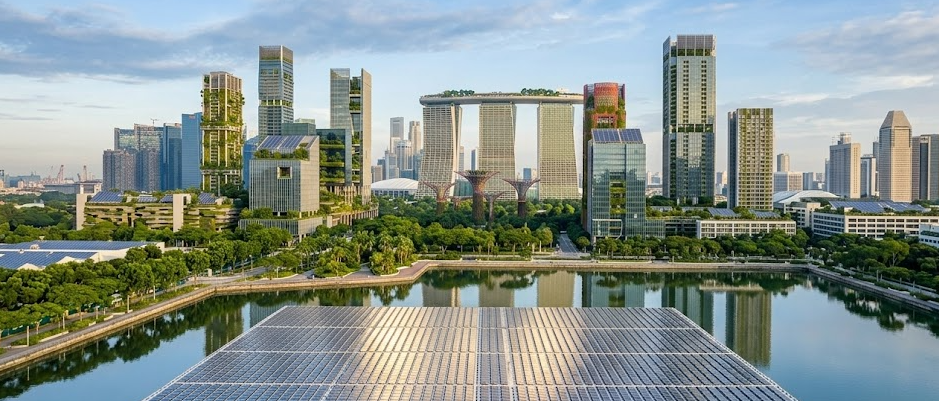
The Tengeh Reservoir Floating Solar Farm is one of the most recognized Singapore Solar Projects.
Instead of occupying valuable land, thousands of solar panels float across the reservoir’s surface. This creative solution generates renewable electricity while reducing water evaporation and helping improve panel efficiency through natural cooling.
The project supplies clean energy that supports water treatment operations, making it an excellent example of how renewable energy and water management can work together.
Key highlights include:
- One of the world’s largest inland floating solar farms
- Thousands of floating photovoltaic panels
- Supports national sustainability goals
- Uses existing water space instead of land
2. HDB SolarNova Programme
Many people don’t realize that public housing plays a huge role in Singapore’s renewable energy plans.
The SolarNova Programme installs solar panels across Housing & Development Board (HDB) rooftops throughout the island. These systems generate electricity for common services such as lifts, corridor lighting, and water pumps.
As more housing estates join the programme, Singapore Solar Projects becomes part of everyday life for thousands of residents.
It’s a practical solution… and one that continues to expand.
3. Changi Airport Solar Installations
Even one of the busiest airports in Asia is embracing renewable energy.
Solar panels have been installed on suitable rooftops and facilities within Changi Airport to reduce dependence on conventional electricity sources. The airport continues exploring additional clean energy opportunities as part of its long-term sustainability strategy.
For an international transport hub operating around the clock, every bit of renewable electricity helps reduce overall emissions.
4. Jurong Island Solar Projects
Jurong Island is known for its petrochemical and energy industries, but it’s also becoming a testing ground for cleaner technologies.
Several companies operating on the island have installed rooftop solar systems to reduce operational energy costs while lowering carbon emissions.
Industrial solar installations demonstrate that renewable energy isn’t only for residential buildings—it can also support heavy industries.
5. Solar Panels Across Government Buildings
Government agencies have gradually introduced solar power across many public facilities.
These include:
- Schools
- Community centres
- Government offices
- Sports facilities
- Military buildings
- Healthcare institutions
Using public infrastructure helps maximize available rooftop space without requiring additional land.
And honestly, it sets a good example for private building owners considering solar adoption.
6. Tuas Mega Port Solar Expansion
Singapore’s next-generation port isn’t only focused on automation.
The Tuas Mega Port also includes sustainability initiatives that incorporate renewable energy where possible. Large warehouse rooftops and operational buildings provide valuable space for solar installations.
As port operations continue expanding over the coming years, renewable energy is expected to play an increasingly important role.
7. Offshore Floating Solar Pilot Projects
Singapore has also experimented with offshore floating solar technology.
Unlike reservoir systems, these projects operate in marine environments where conditions are far more challenging. Engineers continue testing different designs that can withstand waves, saltwater exposure, and changing weather conditions.
While still developing, offshore solar may eventually provide another opportunity for increasing renewable energy production.
8. Industrial Rooftop Solar Networks
Factories and warehouses offer some of the largest uninterrupted roof areas in Singapore.
Thousands of commercial buildings have already installed rooftop solar panels, helping companies reduce electricity bills while supporting national sustainability efforts.
Many businesses also participate through power purchase agreements, allowing them to adopt solar without significant upfront investment.
It’s become one of the fastest-growing segments within Singapore Solar Projects.
9. School Solar Energy Programmes
Education institutions are contributing as well.
Numerous schools have installed rooftop solar systems that generate renewable electricity while serving as educational tools for students.
Children learn about renewable energy through real-life examples rather than classroom theory alone.
That creates long-term awareness… something every sustainable country needs.
10. Future Solar Developments Under Singapore Green Plan
The Singapore Green Plan continues to encourage larger renewable energy adoption across multiple sectors.
Future Singapore Solar Projects may include:
- Additional floating solar farms
- More residential rooftop systems
- Expanded industrial solar deployment
- Advanced battery storage integration
- Smart energy management systems
- Higher-efficiency photovoltaic technology
As technology improves, even limited rooftop spaces can produce more electricity than before.
Benefits of Singapore Solar Projects
The growing number of Singapore Solar Projects delivers several long-term advantages.
Lower Carbon Emissions
Solar electricity produces no direct greenhouse gas emissions during operation, helping reduce Singapore’s environmental footprint.
Better Energy Security
Generating electricity locally reduces dependence on imported energy sources and improves long-term energy resilience.
Lower Operating Costs
Although installation requires investment, solar panels can reduce electricity expenses over many years.
Many businesses recover installation costs through ongoing energy savings.
Smarter Land Use
Floating solar farms, rooftop systems, and integrated building installations allow Singapore to expand renewable energy without sacrificing valuable land.
That’s a major advantage for a land-scarce country.
Challenges Facing Solar Expansion
Singapore Solar Projects energy also comes with limitations.
Cloudy weather affects electricity generation, making battery storage and backup power essential.
Space remains another challenge. Unlike larger countries with vast deserts or open fields, Singapore must carefully use rooftops, reservoirs, and industrial sites.
Maintenance is also important because tropical humidity, rainfall, and dust can reduce panel performance if not cleaned regularly.
Still, improvements in technology continue making solar systems more reliable every year.
The Future Looks Bright
Singapore’s renewable energy journey is far from over.
New projects continue appearing across housing estates, commercial buildings, industrial facilities, reservoirs, and public infrastructure. Researchers are also exploring more efficient Singapore Solar Projects cells, floating technologies, and energy storage solutions.
While Singapore Solar Projects alone won’t meet every electricity need, it has become one of the country’s most valuable clean energy resources.
And that’s likely to remain true for many years ahead.
Final Thoughts
Singapore Solar Projects show how innovation can overcome geographical limitations. Rather than seeing limited land as an obstacle, Singapore has turned rooftops, reservoirs, industrial estates, airports, schools, and public buildings into opportunities for clean electricity generation.
Each new installation brings the country closer to a more sustainable energy future.
Whether you’re interested in renewable energy, environmental policy, or Singapore’s long-term development, these projects demonstrate that smart planning and consistent investment can make a meaningful difference—even in one of the world’s most densely populated nations.