Singapore Urban Greening: How a City Built More Nature Into Everyday Life
When people think about Singapore, they often picture towering skyscrapers, world-class shopping districts, and one of the busiest business hubs in Asia. Yet there’s another side to the city that surprises first-time visitors. Green parks. Tree-lined roads. Nature reserves. Rooftop gardens. Vertical forests. It almost feels like the city was designed around nature instead of replacing it.
That’s exactly what makes Singapore Urban Greening such an interesting topic.
Over the years, Singapore has invested heavily in bringing greenery into every part of urban life. The goal wasn’t simply to make the city prettier. It was about improving public health, reducing heat, protecting biodiversity, and creating better places for people to live.
Let’s explore how Singapore became one of the greenest cities in the world—and why other countries continue to study its approach.
What Is Singapore Urban Greening?
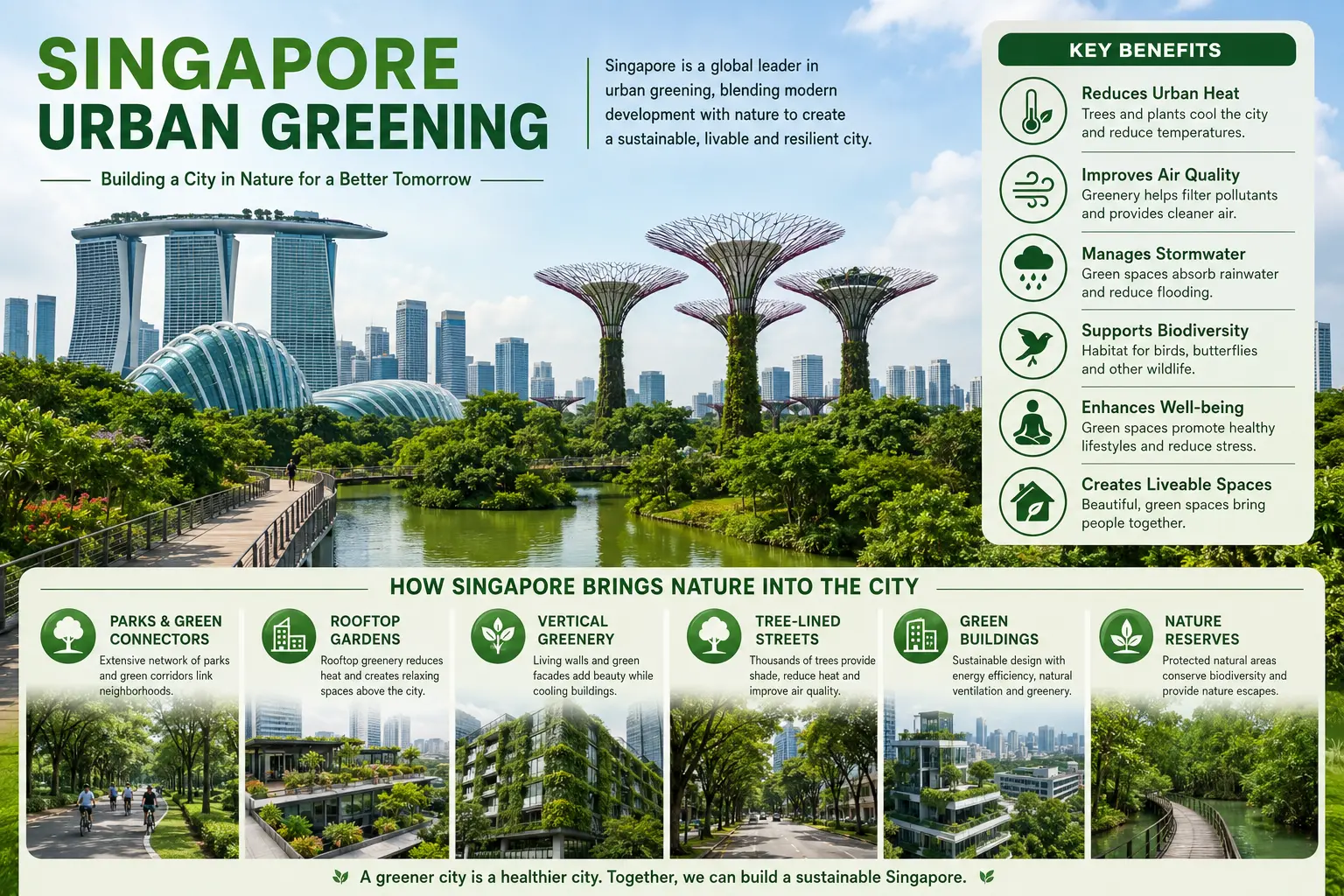
Singapore Urban Greening refers to the country’s long-term effort to integrate nature into cities through parks, gardens, roadside trees, green buildings, rooftop gardens, vertical greenery, park connectors, and environmental planning.
Instead of separating urban development from nature, Singapore combines the two.
This means you’ll often find office towers covered with plants, residential buildings surrounded by gardens, walking trails connecting neighborhoods, and large parks sitting right beside commercial districts.
It’s a simple idea… but executing it across an entire nation takes decades of planning.
Why Singapore Focuses So Much on Green Spaces
Singapore is a small island with limited land. Every square meter matters.
As the population grew, the government realized that urban expansion couldn’t come at the expense of nature. People still needed clean air, cooler neighborhoods, recreational areas, and wildlife habitats.
Urban greening helps solve several challenges at once.
Some of the biggest benefits include:
- Reducing urban heat
- Improving air quality
- Managing stormwater naturally
- Supporting birds, butterflies, and local wildlife
- Encouraging healthier lifestyles
- Creating attractive neighborhoods
- Increasing property appeal
- Improving mental well-being
And honestly… residents simply enjoy living in greener surroundings.
The Vision of Becoming a “City in Nature”
Many cities aim to become greener.
Singapore aims to become a City in Nature.
There’s a subtle difference.
Rather than adding parks after construction is complete, planners try to weave greenery into roads, housing developments, commercial buildings, schools, waterfronts, and transport systems from the beginning.
That approach creates a more connected environment where nature isn’t limited to a few large parks.
Instead, it becomes part of daily life.
Parks That Connect the Entire Island
One of the biggest successes of Singapore Urban Greening is the extensive network of parks and green corridors.
Residents can often walk or cycle between neighborhoods using connected park routes instead of busy roads.
These green connections make outdoor exercise much more enjoyable.
Families spend weekends cycling.
Children play safely.
Joggers avoid traffic.
Bird watchers discover wildlife in unexpected places.
It’s not just infrastructure.
It’s a lifestyle.
Rooftop Gardens Are Becoming More Common
Land is limited.
Roofs aren’t.
That’s one reason rooftop gardens have become increasingly popular throughout Singapore.
Many office buildings, shopping malls, schools, hotels, and residential developments now include landscaped rooftop spaces.
These gardens offer several advantages.
They absorb heat.
They reduce building temperatures.
They improve insulation.
They help manage rainwater.
And they provide peaceful outdoor spaces above busy streets.
Sometimes the best park isn’t on the ground at all.
Vertical Greenery Changes the Skyline
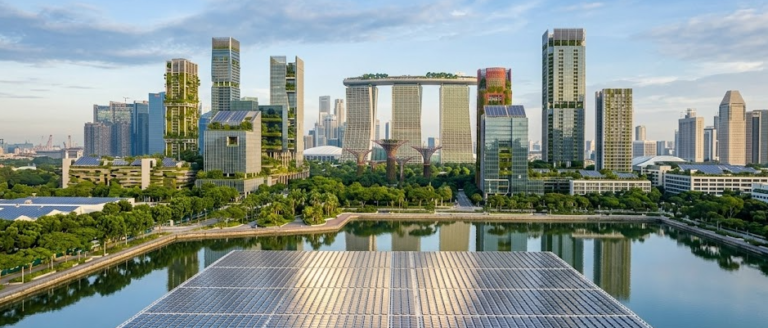
One thing that immediately catches visitors’ attention is the amount of greenery growing directly on buildings.
Living walls.
Green facades.
Plant-covered balconies.
Vertical gardens.
Rather than covering buildings entirely with glass and concrete, architects increasingly include plants as part of the exterior design.
This approach softens the city’s appearance while helping reduce heat around buildings.
It also creates habitats for insects and birds that might otherwise disappear from dense urban areas.
Trees Still Play a Huge Role
Before rooftop gardens became popular…
Before vertical forests became famous…
Singapore was already planting millions of roadside trees.
Today, tree-lined streets remain one of the country’s defining features.
Large rain trees, flowering species, palm trees, and native varieties provide shade across residential areas, highways, parks, and business districts.
The cooling effect is noticeable.
Walking beneath mature trees on a hot afternoon feels completely different from walking across open concrete.
Small changes like this make cities more comfortable.
Green Buildings Support Sustainability
Singapore encourages environmentally friendly construction through green building standards.
Developers increasingly include features such as:
- Sky gardens
- Natural ventilation
- Green roofs
- Energy-efficient designs
- Water-saving systems
- Rainwater collection
- Native landscaping
These additions reduce environmental impact while making buildings healthier and more pleasant for occupants.
It’s sustainability built into everyday architecture.
Nature Reserves Still Matter
Urban greening doesn’t replace natural ecosystems.
It protects them.
Singapore continues to preserve important nature reserves where native plants and wildlife can thrive.
These protected areas help conserve biodiversity while giving residents opportunities to experience forests, wetlands, mangroves, and coastal habitats without leaving the country.
Even in a highly developed city, wild spaces still have value.
Actually… they’re becoming even more valuable.
Community Participation Makes a Difference
Government planning is only one part of Singapore Urban Greening.
Communities also play an important role.
Schools organize tree-planting events.
Residents maintain community gardens.
Volunteers participate in habitat restoration.
Neighborhood groups care for shared green spaces.
This creates a stronger connection between people and the environment.
When residents help build greener neighborhoods, they naturally become more invested in protecting them.
Challenges Still Exist
Urban greening isn’t without difficulties.
Limited land means planners constantly balance housing, transportation, business growth, and environmental conservation.
Climate change also creates new pressures.
Higher temperatures.
Heavier rainfall.
Changing ecosystems.
Maintenance costs continue to grow as more green infrastructure is added across the island.
Even so, Singapore continues adapting its strategies to meet future environmental challenges.
What Other Cities Can Learn
Singapore’s experience offers valuable lessons for cities around the world.
Green planning works best when it begins early.
Nature should be included in long-term development plans rather than treated as an afterthought.
Connecting parks creates more value than building isolated green spaces.
Trees remain one of the simplest and most effective urban investments.
Buildings themselves can contribute to greener cities through thoughtful design.
And perhaps the biggest lesson…
Urban development and environmental protection don’t always have to compete.
With smart planning, they can support each other.
The Future of Singapore Urban Greening
Singapore continues expanding its green network through new parks, ecological corridors, biodiversity initiatives, sustainable architecture, and climate resilience projects.
Future developments are expected to include even more rooftop greenery, restored natural habitats, greener transport corridors, and environmentally friendly neighborhoods.
Technology will likely play a larger role as well, helping monitor tree health, improve irrigation systems, and support sustainable urban planning.
The city keeps evolving.
But the commitment to greenery remains consistent.
Conclusion
Singapore Urban Greening is much more than planting trees or building attractive parks. It’s a long-term vision that blends modern development with nature, creating healthier communities while preparing the city for future environmental challenges.
From rooftop gardens and vertical greenery to connected park networks and protected nature reserves, Singapore demonstrates that dense urban living doesn’t have to mean sacrificing green space.
Its journey continues, and cities around the world are paying close attention. As urban populations grow, Singapore’s approach offers practical ideas for creating cleaner, cooler, and more livable environments where both people and nature can thrive together.
Frequently Asked Questions
What is Singapore Urban Greening?
Singapore Urban Greening is the country’s strategy of integrating parks, trees, rooftop gardens, green buildings, and natural spaces into urban development to create a healthier and more sustainable city.
Why is urban greening important in Singapore?
Urban greening helps reduce heat, improve air quality, protect biodiversity, manage stormwater, encourage outdoor activities, and improve the overall quality of life for residents.
How does Singapore include greenery in buildings?
Many buildings feature rooftop gardens, vertical green walls, landscaped terraces, sky gardens, and environmentally friendly architectural designs that support sustainability.
Does Singapore still protect natural forests?
Yes. Alongside urban greening projects, Singapore preserves nature reserves, wetlands, mangroves, and other important habitats to conserve native wildlife and ecosystems.
Can other cities follow Singapore’s urban greening model?
Yes. While every city has different challenges, many of Singapore’s ideas—such as connected parks, roadside tree planting, green buildings, and long-term environmental planning—can be adapted to improve urban sustainability worldwide.