Singapore Waste Management: 10 Things Every Resident and Business Should Know
Singapore waste management is often recognised as one of the country’s biggest environmental success stories. With limited land, a growing population, and millions of visitors each year, managing waste isn’t just important—it’s necessary.
Every plastic bottle, food container, cardboard box, and piece of electronic waste has to go somewhere. That means Singapore has developed an efficient system that focuses on waste collection, recycling, resource recovery, and responsible disposal.
Still, the system works best when businesses and residents play their part.
If you’re wondering how Singapore waste management works, what happens after your rubbish is collected, and how you can reduce waste more effectively, this guide covers everything you need to know.
Why Singapore Waste Management Matters
Singapore is a small island nation with limited natural resources and very little land available for landfill expansion.
Unlike larger countries that can create multiple landfill sites, Singapore depends on a carefully planned waste management system to keep the city clean while protecting the environment.
Every day, thousands of tonnes of waste are generated from homes, offices, restaurants, shopping malls, factories, and construction projects.
Without proper planning, waste would quickly become a serious environmental challenge.
That’s why Singapore continues investing in recycling programmes, waste-to-energy technologies, public education, and sustainable practices.
How Waste Is Collected Across Singapore
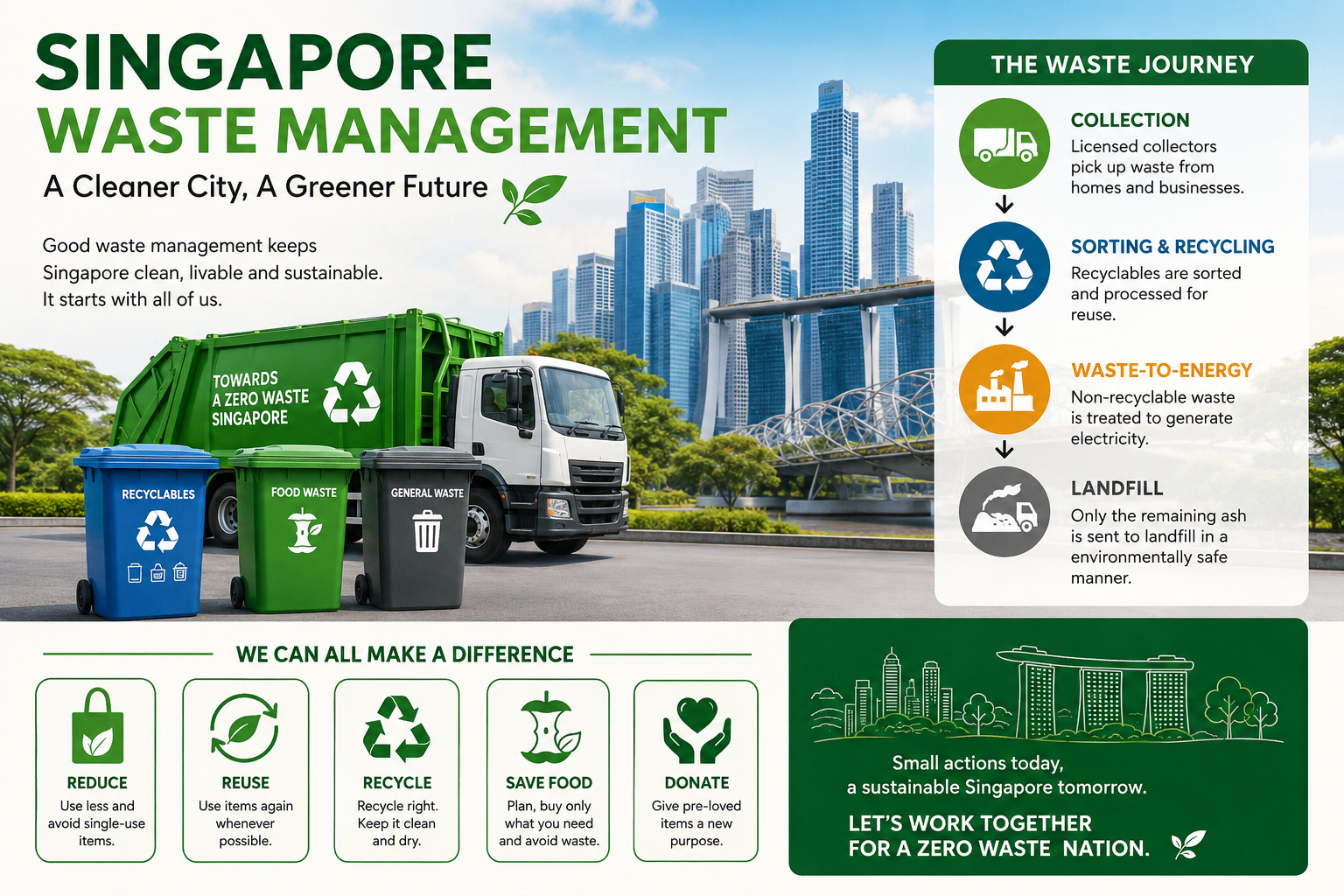
Waste collection is handled through licensed public waste collectors assigned to different sectors across the island.
Residential buildings usually have dedicated collection schedules, while commercial properties often arrange customised collection services depending on the amount of waste they produce.
Collection includes various waste streams, such as:
- General household waste
- Food waste
- Recyclables
- Bulky waste
- Industrial waste
- Garden waste
- Construction debris
Businesses that generate large amounts of waste often work with specialised waste management providers that offer collection, sorting, recycling, and disposal services.
Recycling Plays a Bigger Role Than Many People Realise
One of the main goals of Singapore waste management is reducing the amount of waste that reaches disposal facilities.
Many recyclable materials can be processed and reused instead of being discarded.
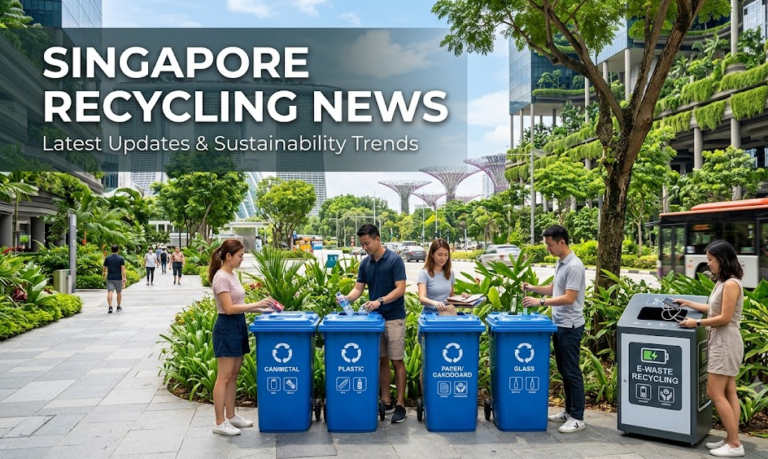
Common recyclable materials include:
- Paper
- Cardboard
- Plastic bottles
- Metal cans
- Glass containers
- Selected electronic items
The blue recycling bins found across many residential estates make recycling easier for households.
Still… recycling only works properly when recyclable items are clean and placed in the correct containers. Contaminated materials often cannot be recycled and may end up being treated as general waste.
Food Waste Remains One of the Biggest Challenges
Food waste continues to be a major environmental concern.
Restaurants, supermarkets, hotels, food manufacturers, and households throw away significant amounts of edible and non-edible food every year.
Reducing food waste starts with simple habits.
Planning meals carefully.
Buying only what you need.
Using leftovers creatively.
Businesses can also donate surplus food where appropriate or invest in food waste treatment solutions that recover useful resources from organic waste.
Small improvements made consistently can have a noticeable impact.
Waste-to-Energy Helps Reduce Landfill Use
Many people assume collected waste simply ends up buried underground.
That’s not how the system works.
A large portion of non-recyclable waste is processed at waste-to-energy facilities, where it is incinerated under controlled conditions.
The process reduces the overall volume of waste significantly while generating electricity that contributes to Singapore’s energy needs.
Only the remaining ash requires landfill disposal.
This approach helps maximise limited land while recovering value from materials that cannot be recycled.
Businesses Have Greater Singapore Waste Management
Commercial properties generally produce much larger amounts of waste than households.
Offices, warehouses, retail stores, shopping centres, hotels, and manufacturing facilities often require structured Singapore Waste Management plans.
Good Singapore Waste Management practices include:
- Separating recyclable materials
- Reducing unnecessary packaging
- Managing confidential document disposal
- Recycling electronic equipment responsibly
- Training employees on proper waste handling
- Working with licensed Singapore Waste Management providers
Besides helping the environment, better Singapore Waste Management can also lower disposal costs over time.
Electronic Waste Needs Special Handling
Old laptops.
Broken mobile phones.
Televisions.
Printers.
Batteries.
These items should never be mixed with general household waste.
Electronic devices contain valuable materials that can be recovered, along with components that require proper treatment.
Singapore has expanded electronic waste recycling options, making it easier for residents and businesses to dispose of unwanted electronics responsibly.
Instead of storing unused devices for years—or throwing them into ordinary bins—using approved collection points helps recover useful resources while reducing environmental impact.
Construction Waste Can Often Be Recovered
Construction and renovation projects generate large amounts of waste materials.
These include:
- Concrete
- Metal
- Timber
- Asphalt
- Bricks
- Soil
Many of these materials can be sorted and recovered for future use instead of being discarded.
Construction companies that implement proper waste separation often improve operational efficiency while supporting sustainability goals.
Even smaller renovation projects benefit from organised waste disposal rather than mixing everything together.
Small Daily Habits Make a Big Difference
Improving Singapore waste management isn’t only the responsibility of businesses or government agencies.
Residents contribute every single day.
Simple habits include:
- Carrying reusable shopping bags
- Using refillable water bottles
- Recycling correctly
- Reducing single-use plastics
- Repairing items instead of replacing them immediately
- Donating usable furniture and clothing
- Avoiding unnecessary packaging
They sound small.
But multiplied across millions of people… the impact becomes significant.
The Future of Singapore Waste Management
Singapore continues developing smarter ways to manage waste while supporting long-term sustainability.
Future improvements are expected to include:
- Increased recycling participation
- Better food waste recovery systems
- Smarter waste collection technologies
- Greater use of automation
- Improved circular economy initiatives
- Stronger business sustainability programmes
As technology improves, Singapore Waste Management will likely become even more efficient while helping reduce environmental impact.
The focus isn’t only on disposing of waste anymore.
It’s about reducing waste before it’s created.
Tips for Choosing a Waste Management Company
If you’re looking for professional Singapore waste management services for your business, choosing the right provider matters.
Look for companies that offer:
- Licensed waste collection services
- Recycling solutions
- Reliable collection schedules
- Transparent pricing
- Experience with commercial and industrial waste
- Proper environmental compliance
- Flexible service plans
A dependable waste management partner can help businesses improve efficiency while supporting sustainability objectives.
Final Thoughts
Singapore’s waste management has become one of the country’s strongest examples of practical environmental planning. From efficient waste collection and recycling programmes to waste-to-energy facilities and responsible disposal systems, every part of the process helps keep the city clean and sustainable.
But the system depends on everyone’s participation. Households can recycle correctly and reduce unnecessary waste, while businesses can introduce better waste handling practices and work with licensed service providers. Small improvements, repeated every day, lead to meaningful long-term results.
As Singapore continues investing in smarter technologies and sustainable solutions, responsible waste management will remain an essential part of building a cleaner, greener future for generations to come.