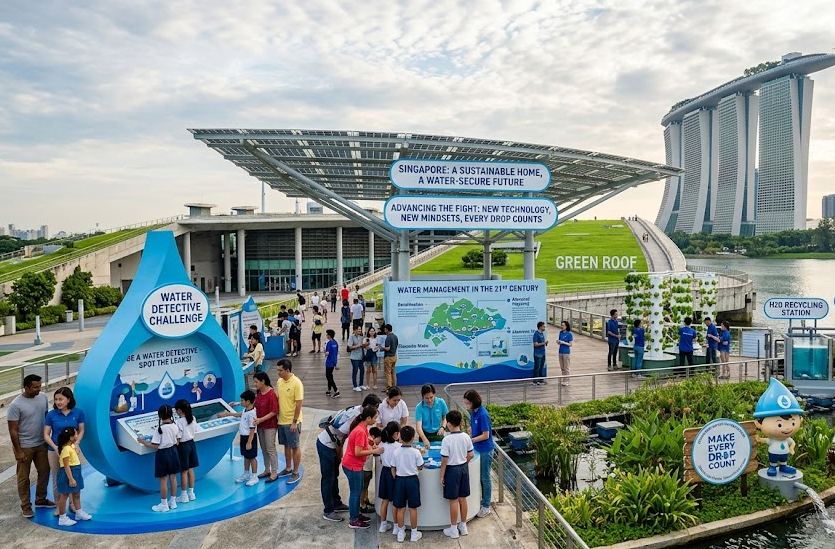
Singapore Water Conservation: 12 Practical Ways Singapore Is Protecting Every Drop
Water is something most of us rarely think about—until it isn’t there.
Turn on the tap, fill a glass, wash the dishes… it all feels effortless. Yet in Singapore, every drop has a story. The country has very limited natural freshwater resources, and meeting the needs of millions of people requires careful planning, smart technology, and everyday responsibility.
That’s why Singapore water conservation isn’t just an environmental campaign. It’s a long-term national priority that involves households, businesses, schools, and industries working together.
The good news? It works.
Singapore has become one of the world’s leading examples of sustainable water management. From recycling wastewater into ultra-clean drinking-quality water to encouraging residents to use water more wisely, the country continues to set a high standard.
Let’s look at how Singapore protects one of its most valuable resources—and what everyone can learn from it.
1. Water Is a Precious Resource in Singapore
Unlike many countries with large rivers and lakes, Singapore has limited natural water sources. The nation depends on a combination of local rainfall, imported water, desalinated seawater, reclaimed water, and reservoirs to meet daily demand.
That means every litre counts.
As the population grows and industries expand, managing water carefully becomes even more important. Singapore Water Conservation helps ensure there is enough clean water today and for future generations.
It’s not just about saving money on utility bills. It’s about protecting national water security.
2. NEWater Is Changing the Way Water Is Reused
One of Singapore’s greatest achievements is the development of NEWater.
NEWater is high-quality reclaimed water produced from treated used water through advanced purification processes. It goes through multiple treatment stages, including microfiltration, reverse osmosis, and ultraviolet disinfection.
The result is water that is exceptionally clean.
Today, NEWater supports industries that require ultra-pure water while also supplementing Singapore’s reservoirs. This reduces dependence on imported water and strengthens the country’s long-term water supply.
It’s a great example of turning a challenge into an opportunity.
3. Smart Technology Helps Reduce Water Waste
Technology plays a huge role in Singapore water conservation.
Water agencies use smart sensors, digital monitoring systems, and advanced analytics to detect leaks before they become major problems. Pipelines are monitored around the clock, allowing maintenance teams to respond quickly.
Even households are benefiting.
Many modern homes now include water-efficient appliances, smart washing machines, and low-flow fixtures that reduce consumption without affecting comfort.
Little improvements… repeated across thousands of homes… make a surprisingly big difference.
4. Every Household Can Save Water
Saving water doesn’t always require expensive upgrades.
Simple daily habits can reduce water usage significantly.
Some easy examples include:
- Turn off the tap while brushing your teeth.
- Take shorter showers.
- Wash full loads of laundry instead of half loads.
- Repair leaking taps quickly.
- Use a bucket instead of a running hose when cleaning outdoor areas.
- Reuse water where appropriate for plants or cleaning.
These small actions may seem minor individually, but across millions of residents, they add up to millions of litres saved every year.
5. Water-Efficient Products Make a Difference
Singapore encourages consumers to choose products designed to use less water.
Water-efficient showerheads, washing machines, taps, and dual-flush toilets help reduce unnecessary consumption without affecting daily convenience.
When replacing old appliances, choosing efficient models often saves both water and electricity over time.
It’s one purchase that keeps paying back.
6. Businesses Also Play an Important Role
Singapore Water Conservation isn’t only for homes.
Commercial buildings, hotels, shopping centres, restaurants, and manufacturing facilities all consume significant amounts of water each day.
Many businesses now:
- Monitor water usage regularly.
- Install efficient plumbing systems.
- Recycle process water.
- Detect leaks early.
- Train employees on water-saving practices.
Lower water usage often leads to lower operating costs as well, making conservation a smart business decision.
7. Schools Teach Water Conservation from an Early Age
Children in Singapore learn about responsible water use from a young age.
Schools regularly include environmental education, water-saving campaigns, and interactive learning activities that explain where water comes from and why Singapore Water Conservation matters.
Students often bring these habits home.
And that’s where the real impact begins.
One child reminding the family to turn off the tap can create a habit that lasts for years.
8. Rainwater Collection Supports the National Water Supply
Singapore captures rainwater through an extensive network of drains, canals, reservoirs, and waterways.
Instead of allowing rainfall to simply flow into the sea, much of it is collected, treated, and stored for future use.
This integrated system allows the country to make the most of every rainfall event, even in an urban environment.
It’s smart infrastructure working quietly in the background every day.
9. Desalination Adds Another Reliable Water Source
Another major part of Singapore water conservation is reducing dependence on any single water source.
Desalination plants convert seawater into drinking water through advanced treatment technology.
While desalination requires significant energy, it provides a reliable supply regardless of rainfall.
Combined with NEWater and local reservoirs, it strengthens Singapore’s long-term water resilience.
10. Public Campaigns Encourage Everyday Action
Awareness matters.
Singapore regularly runs public education campaigns that encourage residents to develop water-saving habits.
Community events, educational materials, online resources, and conservation challenges remind people that everyone has a role to play.
The message is simple:
Saving water isn’t difficult.
It just requires consistency.
11. Climate Change Makes Singapore Water Conservation Even More Important
Climate patterns are becoming less predictable around the world.
Some years bring heavier rainfall.
Others bring longer dry periods.
Planning for these uncertainties means building a water system that is flexible, resilient, and efficient.
Singapore continues investing in new technologies, better infrastructure, and sustainable water management strategies to prepare for future challenges.
It’s a long-term approach rather than a short-term solution.
12. Every Individual Can Help Protect Singapore’s Water Future
Government policies and advanced technology can only go so far.
Real success depends on everyday choices made by individuals.
Taking shorter showers.
Fixing leaks quickly.
Using water-efficient appliances.
Avoiding unnecessary waste.
Teaching children good habits.
Supporting sustainable practices.
These actions don’t require major sacrifices. They simply become part of daily life.
When millions of people make those choices together, the impact becomes enormous.
Final Thoughts
Singapore water conservation is one of the country’s strongest examples of long-term planning combined with public participation.
Through advanced technologies like NEWater, desalination, rainwater harvesting, efficient infrastructure, and widespread community involvement, Singapore has built a water system admired around the world.
But the story doesn’t end with government projects or engineering achievements.
It continues every time someone turns off a running tap, repairs a leaking pipe, or chooses a water-efficient appliance.
Small actions really do matter.
And when those actions are repeated every day across an entire nation, they help protect one of life’s most valuable resources—for today, tomorrow, and many years ahead.